
10 mi
About 3,000 ft
Lined up on the approach, gear often still up.
Altitude
Airliners usually cruise between about 31,000 and 42,000 feet, roughly 6 to 8 miles up. Business jets can climb higher. Turboprops fly lower, light aircraft lower still, and helicopters often stay below 2,000 feet.
The height you see depends on the aircraft, the length of the flight and where it is on the journey. Near an airport, even a jumbo jet is only a few thousand feet up.
Typical heights
These are typical cruising heights, not limits. A short hop may never reach the top of its range, and air traffic control can hold an aircraft lower or higher to keep it apart from others.
| Aircraft | Typical cruise | Notes |
|---|---|---|
| Airliners (A320, 737, 787, A350) | 31,000 to 42,000 ft | Higher as fuel burns off and the aircraft gets lighter. |
| Business jets | 41,000 to 51,000 ft | Some large business jets are certified to 51,000 ft, above the airliners. |
| Regional turboprops (ATR 72, Dash 8) | 17,000 to 27,000 ft | Propellers work best lower down. Common on short UK and island routes. |
| Light aircraft | 1,500 to 8,000 ft | Often flying by sight, below the controlled airspace around big airports. |
| Helicopters | 500 to 2,000 ft | Police and air ambulance often around 1,000 to 1,500 ft over towns. |
| Concorde, for comparison | Up to 60,000 ft | Retired in 2003. High enough to see the curve of the earth. |
The reasons
Thin air means less drag. A jet engine is most efficient high up, so cruising in the thinner air saves a great deal of fuel on a long flight. It also puts the aircraft above most of the weather, so the ride is smoother.
There is a ceiling, too. Climb too high and the air becomes too thin for the wings and engines, so each aircraft has a maximum certified altitude. As fuel burns off, the aircraft gets lighter and can climb higher, which is why long-haul flights often step up during the journey.
Short flights do not bother climbing so far. On a 45-minute hop, time spent climbing to 39,000 feet would barely be used before the descent began.
The numbers on a tracker
High up, aircraft do not use height above the sea. They all set their altimeters to the same standard air pressure, so they all measure height the same way and stay safely apart. That reading is called a flight level and is written in hundreds of feet: FL350 is about 35,000 feet.
Below the transition altitude, aircraft switch back to the local pressure so they measure height above the sea accurately for the approach and landing. In the UK the transition altitude is usually between 3,000 and 6,000 feet, depending on the area.
Direction matters as well. Aircraft heading roughly east use odd flight levels such as FL350 and FL370, and aircraft heading roughly west use even ones such as FL360 and FL380, so traffic flying in opposite directions is always kept 1,000 feet apart.
Coming in to land
A standard approach descends along a slope of about 3 degrees. That works out to roughly 300 feet of height for every mile from the runway. An aircraft 10 miles out is about 3,000 feet up, and one 3 miles out is about 1,000 feet up.
Departures climb more steeply, often several thousand feet in the first few miles, which is why the noise footprint of a departure is shorter but louder than that of an arrival.
10 mi
Lined up on the approach, gear often still up.
5 mi
Gear down, flaps out, clearly audible.
1 mi
Seconds from touchdown. The one that rattles the windows.
Seeing and hearing
At 35,000 feet an aircraft is about 6.6 miles straight up. Most of the time it is not straight up, so the real distance is further. You will usually see the contrail before you notice the aircraft, and on a still day you may hear it a little behind where it appears to be, because sound takes about half a minute to come down from that height.
Its radio signal reaches much further than you can see. From cruising height, an aircraft's position broadcast can be picked up by a receiver on the ground more than 200 miles away, which is how tracking networks see it. Why planes disappear over the sea explains what happens beyond that.
On the desk
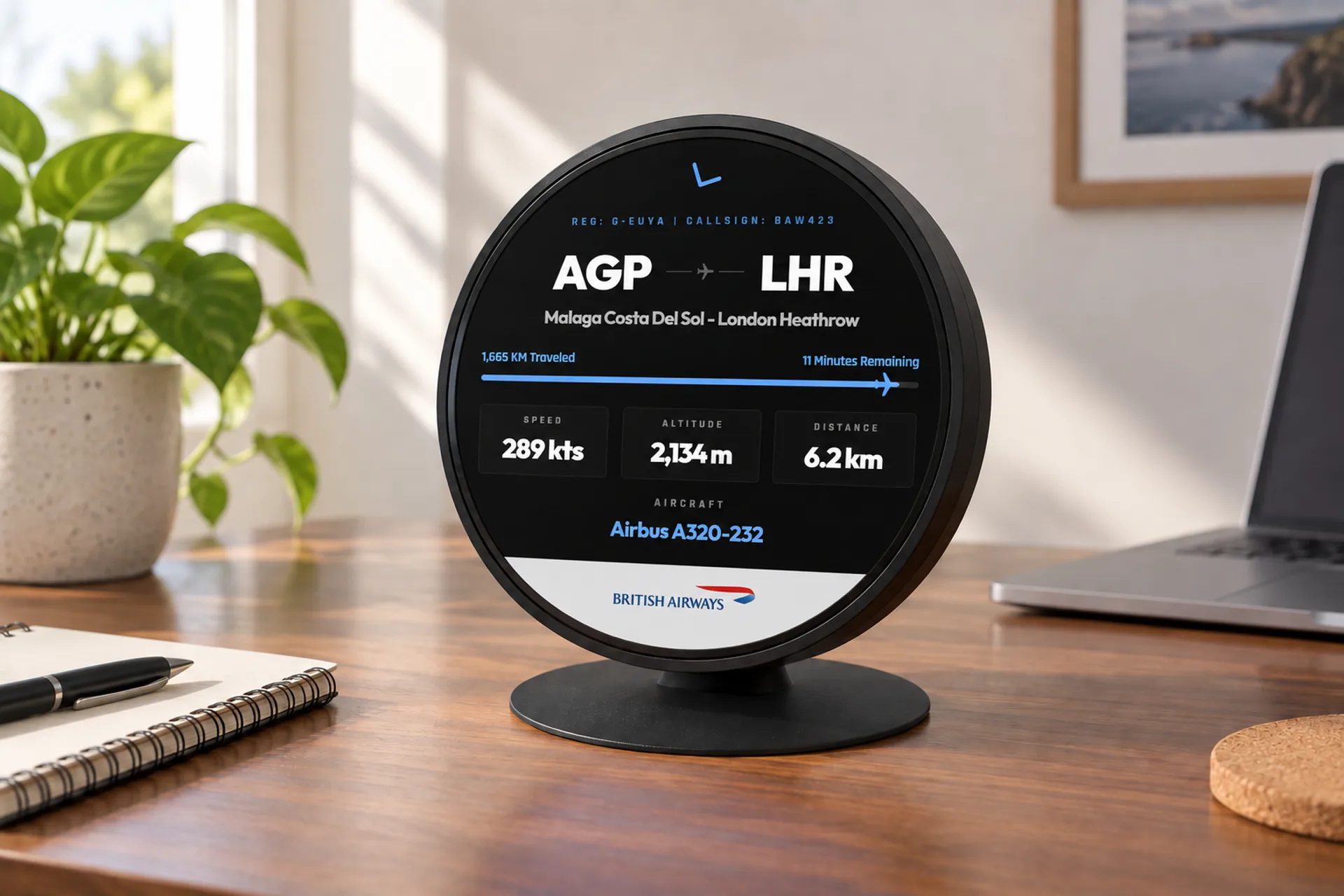
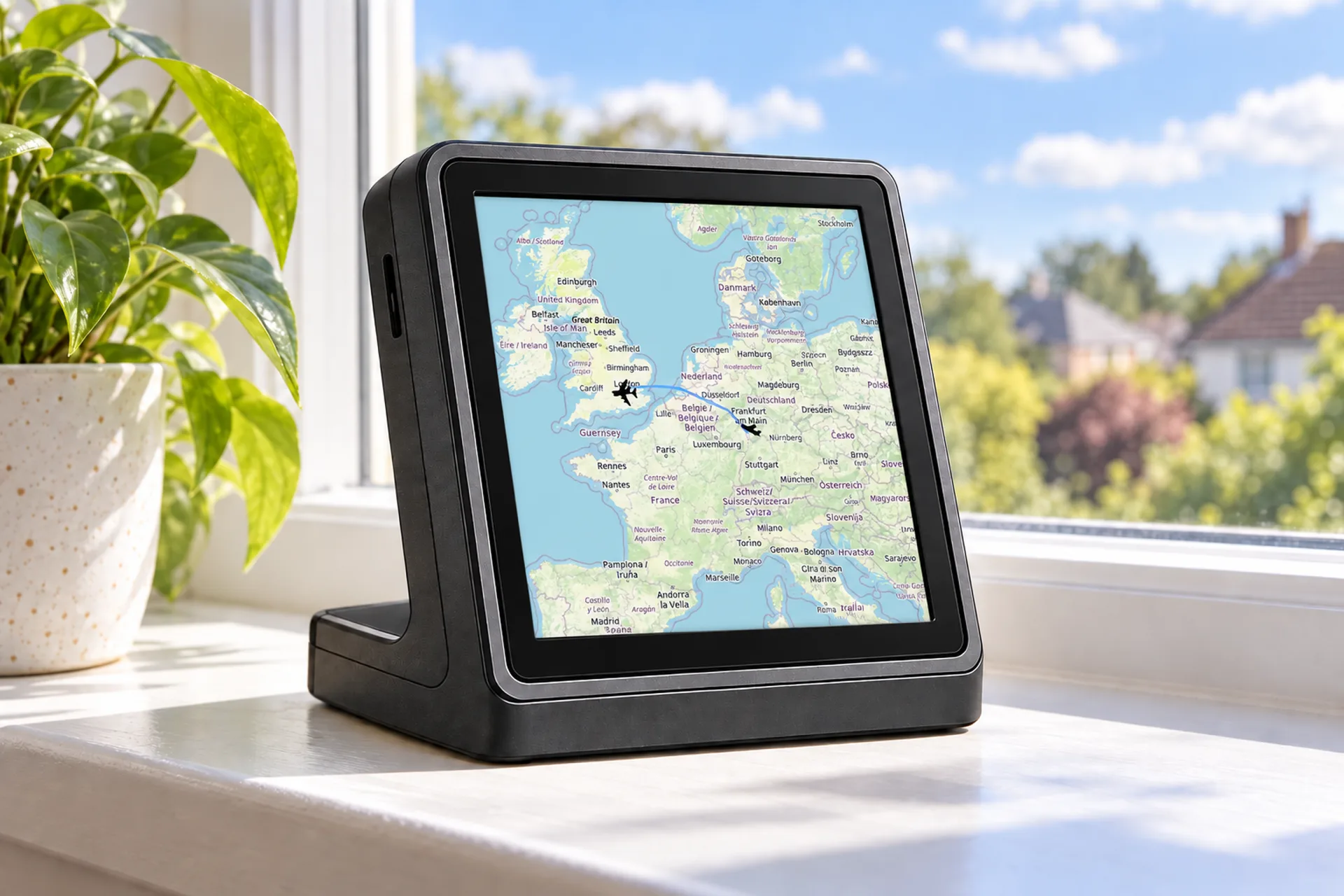
FlightAbove shows the aircraft over your house with its height and speed, next to the flight, the type, a photo of that type and the route. Look up, look down, and you know whether that was a jet at 37,000 feet or a turboprop at 4,000.
Filters let you hide aircraft on the ground, or only show traffic in a band of height, so a busy airport nearby does not crowd out the sky you care about.
Hardware from £99.00, paid once, made in the UK
Quick answers
Airliners usually cruise between about 31,000 and 42,000 feet. Business jets can go higher, up to around 51,000 feet. Turboprops fly lower, light aircraft usually below 8,000 feet, and helicopters often below 2,000 feet.
About 6.6 miles, or about 10.7 kilometres.
The thin air means less drag, so the engines use less fuel, and the aircraft is above most of the weather. It is a balance: much higher and the air becomes too thin for the wings and engines.
Flight level 350, about 35,000 feet measured against standard air pressure. High up, every aircraft uses the same pressure setting, so they all measure height the same way.
Away from airports, much higher than most people think. Near an airport, an arriving aircraft descends about 300 feet per mile, so it is around 3,000 feet up 10 miles from the runway.
Concorde regularly cruised close to 60,000 feet. Today's airliners are certified to around 39,000 to 43,000 feet.
Why do planes fly over my house?· What are planes overhead?· Why planes disappear over the sea· How aircraft tracking works
Height, at a glance
The flight, the type, a photo and the height of the aircraft over your house, on a screen you leave on. Paid once, made in the UK.