
2,048
64 by 32
NearestPlane publishes this RGB matrix. Two rows of text, then the panel is full.
The dots
Flight display vs an LED matrix is a question about dots. A 64 by 32 board has 2,048 lamps. A 128 by 64 board has 8,192. That grid can spell a callsign. It cannot hold a photograph of the aircraft, a radar picture, or a map you can read.
FlightAbove is the screen: a 4 inch square, a 5 inch circle, a 7 inch widescreen, or the television you already own. The departure-board look is one face on that screen, drawn at 1920 by 1080 on a TV. Prices for the other products below are what their own sites showed on 14 October 2026.
Count the lamps
Hobby flight boards and the finished LED products in this category are built on the same family of panels. The number in the advert is the whole display.
2,048
NearestPlane publishes this RGB matrix. Two rows of text, then the panel is full.
4,096
A common hobby HUB75 panel. Still a block of lamps, with room for a short stack of lines.
8,192
TheFlightWall Mini publishes this grid, on a 320 by 160 mm cabinet.
2,073,600
A television. FlightAbove draws the LED-style board at this size, more than 250 times the 128 by 64 grid.
Same job, different object
Each of these shows live aircraft. The split is what the picture is made of. Figures for TheFlightWall and NearestPlane are from their own pages, linked at the bottom of this section.
Screen
LED matrix
LED matrix
LED matrix
Sources, as published on 14 October 2026: TheFlightWall Mini, TheFlightWall Widescreen, NearestPlane.
What the extra pixels are for
The lamp boards are good at one layout: a line of text and a few numbers. FlightAbove keeps that layout, then has room for the rest. The window reaches out to 250 km. When nothing is in it, the screen is a clock and the weather.
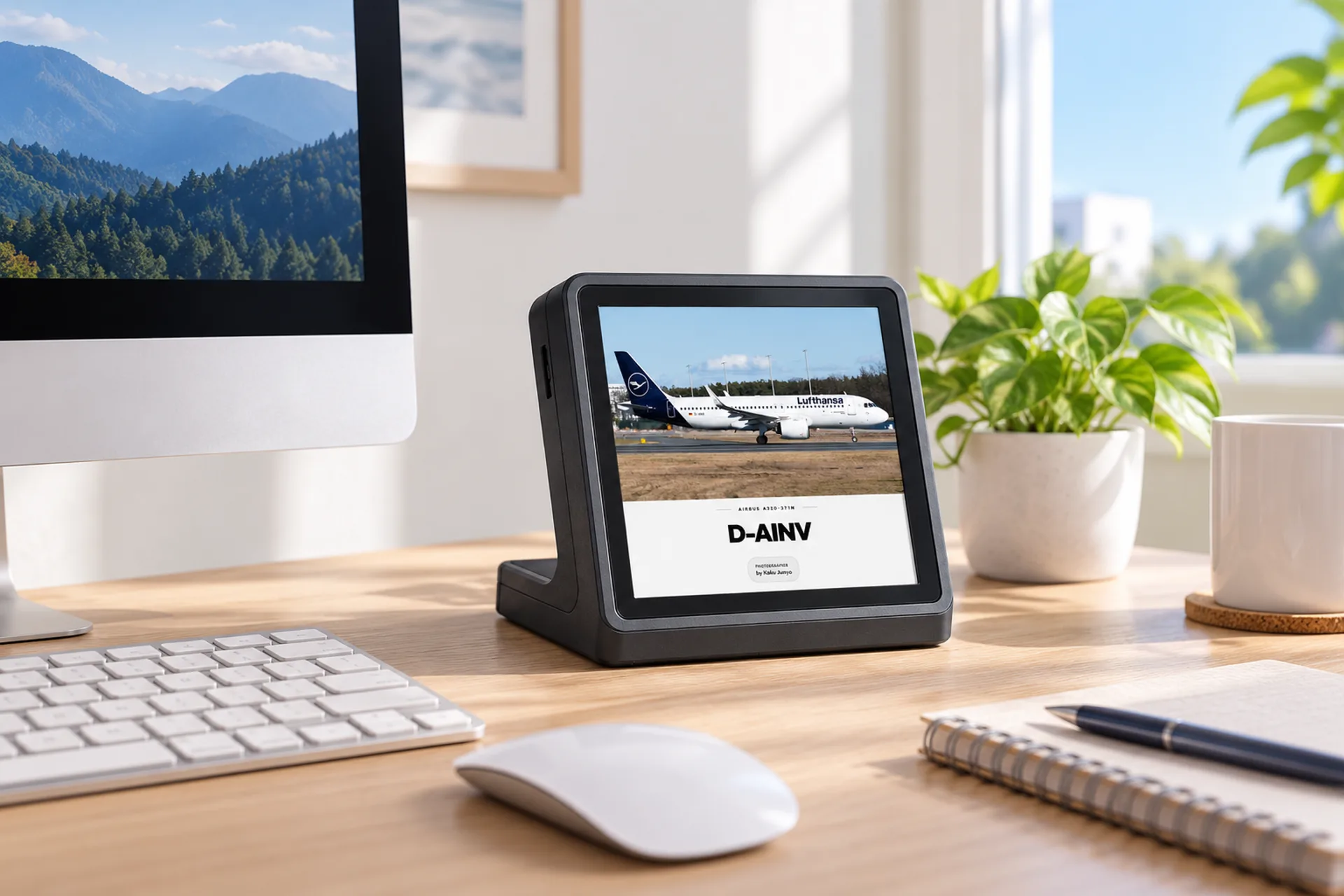
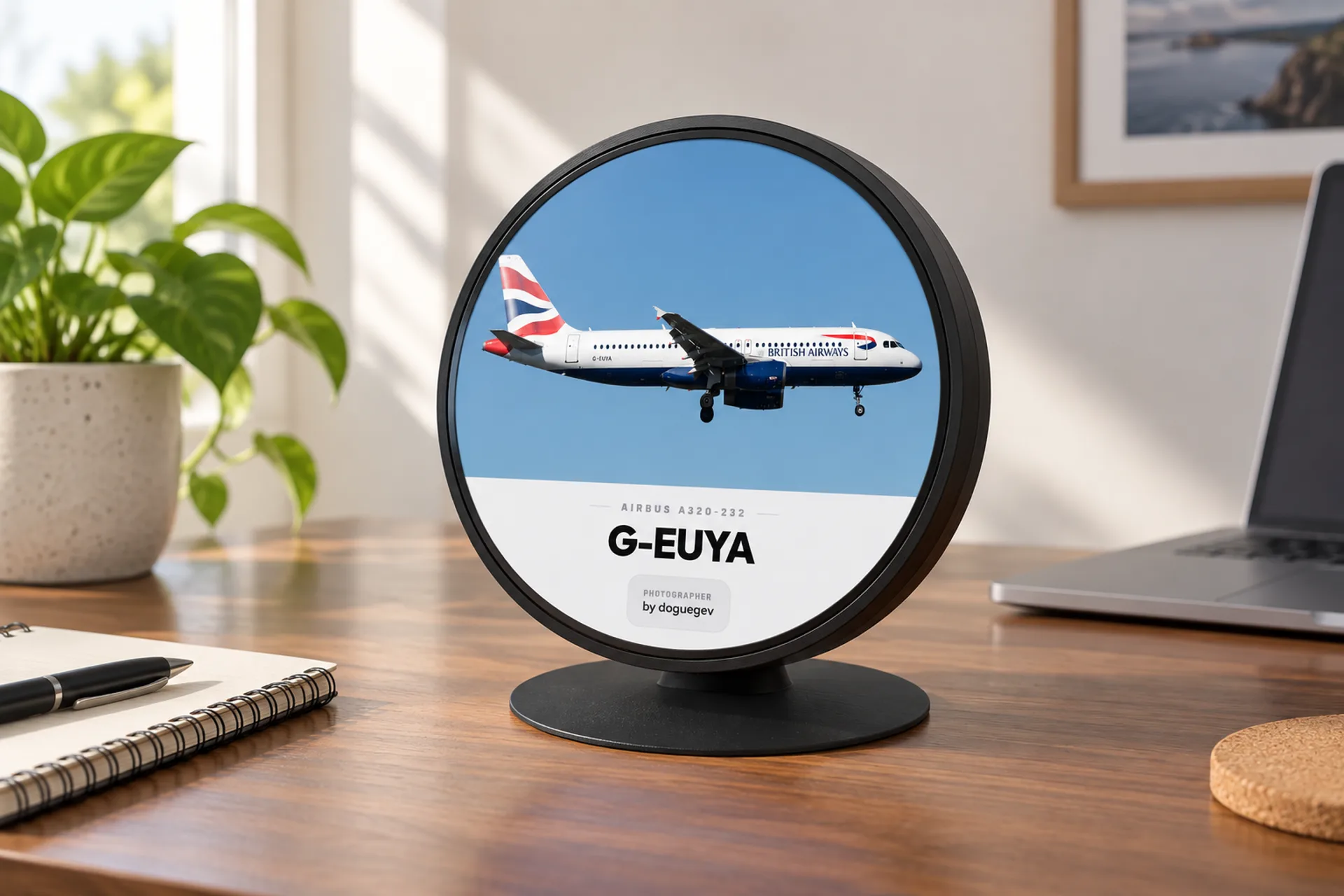
Type, callsign and a photo of that type. A 128 by 64 matrix can print the type code. It cannot show the aeroplane.
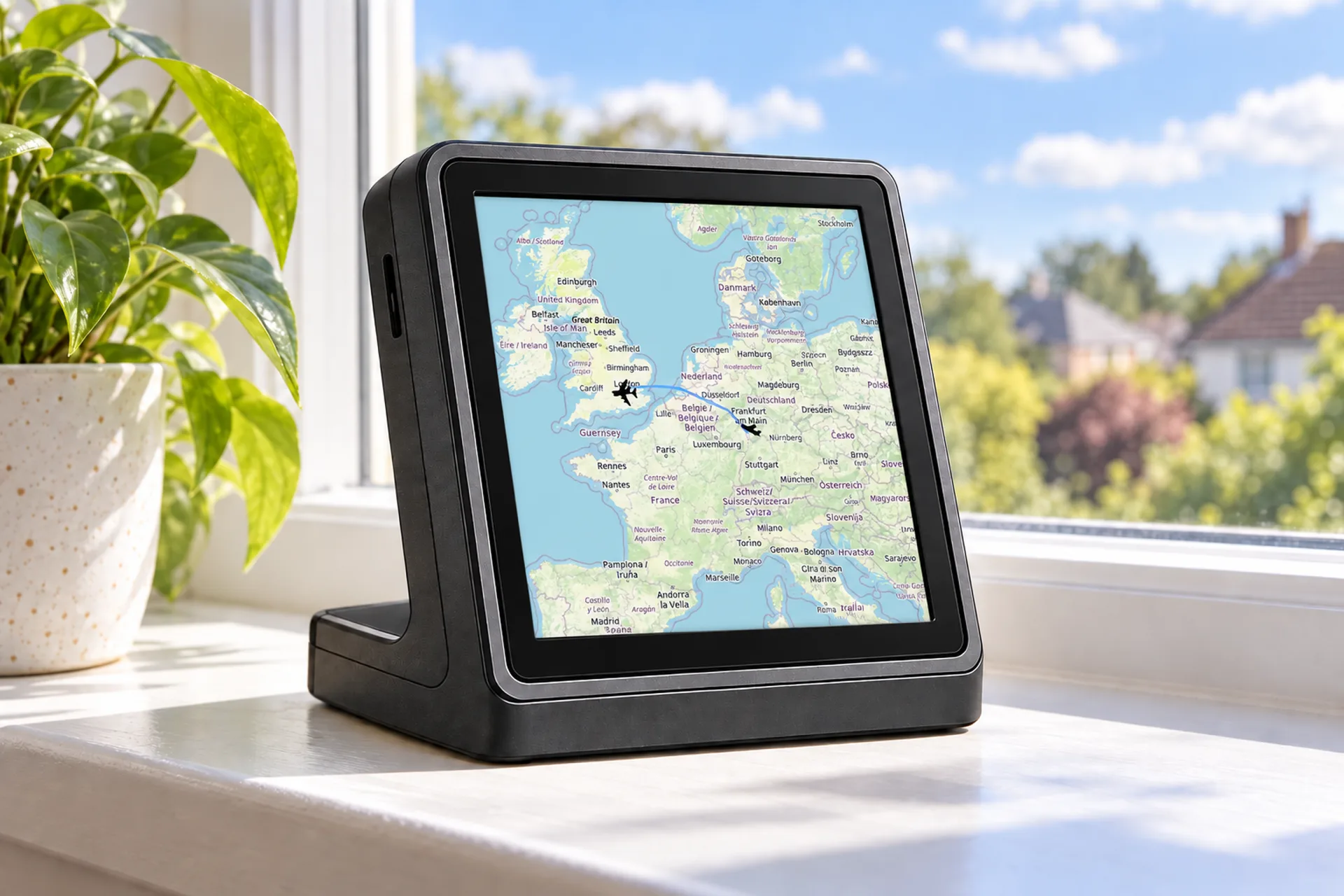
Radar draws the aircraft around the house on one picture. A text board lists a handful of flights and stops.
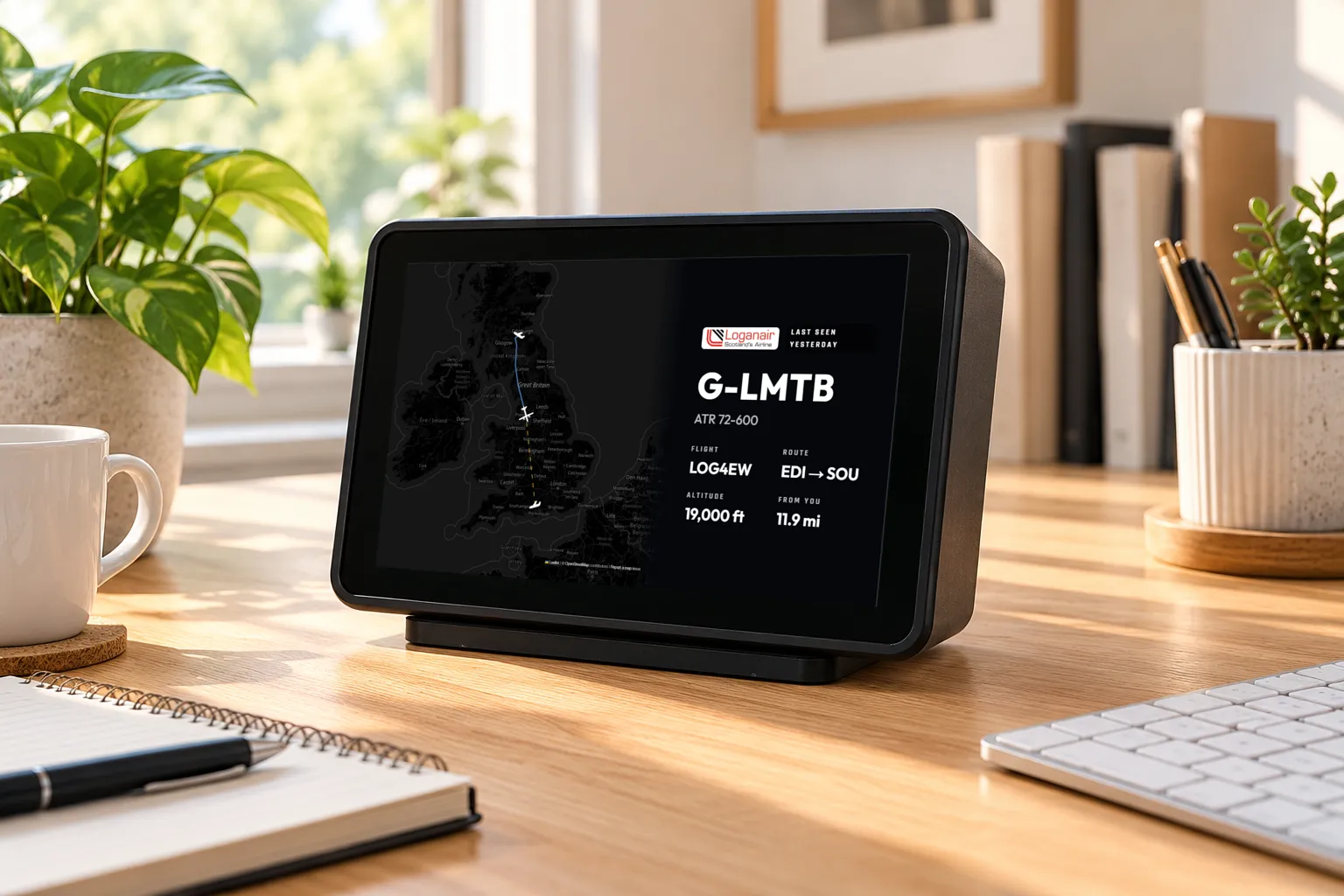
Horizon is a 7 inch widescreen. The map is part of the display, on the same glass as the flight.
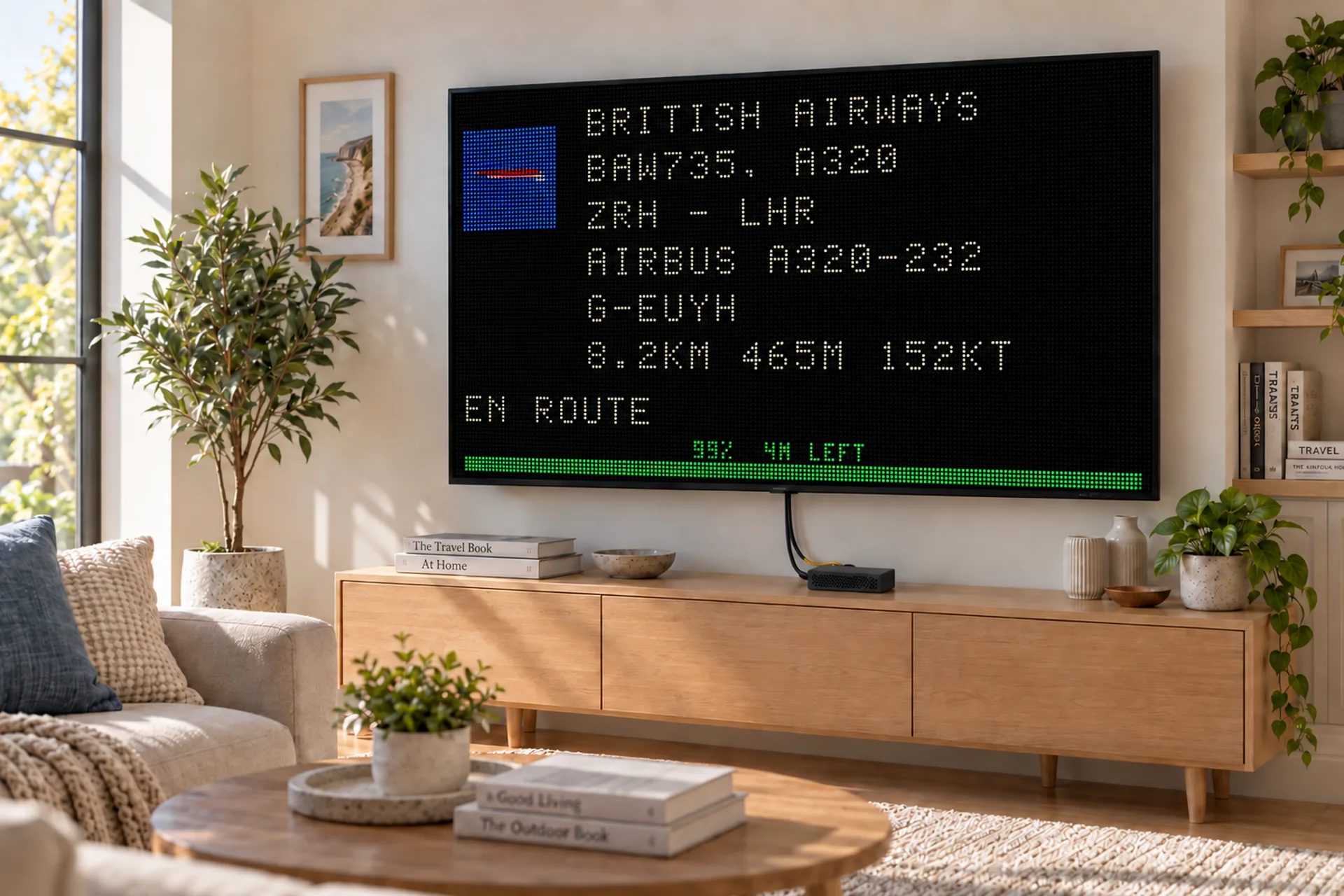
LED Wall on Connect, a Raspberry Pi 4, into a TV you own. Same departure-board idea as a matrix, drawn at 1920 by 1080.
Pick the object
TheFlightWall widescreen is 1.28 m across. That is furniture. Horizon is a 7 inch desk screen. If the room wants a band of light on the wall, the cabinet is the product.
NearestPlane at £124.99, or a hobby panel you build, is the cheap way to put a flight number on a shelf. FlightAbove costs more. The screen is the reason.
If you will never want a photograph, a radar or a map, a matrix is a finished object. FlightAbove is for the person who wants those, and the board, on the same glass.
FlightAbove hardware from £99.00, paid once, produced in the United Kingdom. Cloud from £3.99/month if you already have a screen.
Quick answers
An LED matrix is a grid of lamps, often 64 by 32, 64 by 64 or 128 by 64. That is enough for a callsign and a few numbers. A flight display is a screen: it can hold a photograph of the aircraft, a radar picture and a map, and it can also draw a departure-board look when you want one.
8,192. A 64 by 64 panel has 4,096. A 64 by 32 panel has 2,048. A 1920 by 1080 television has 2,073,600 pixels, more than 250 times the 128 by 64 board. FlightAbove draws its LED-style board at that television size.
TheFlightWall Mini is published as a 128 by 64 LED matrix, 320 by 160 mm, listed at $175 on their US shop. Their widescreen is a 1,280 by 320 mm LED cabinet, listed at $499. Both are lamp boards. Setup uses their iOS and Android app, on 2.4 GHz Wi-Fi, and they say the picture updates every 10 seconds.
NearestPlane publishes a 64 by 32 RGB LED matrix, about 27 cm wide, listed at £124.99. Setup is a browser page after you join their hotspot. They say there is no app and no subscription, and the picture updates every 30 seconds.
A few thousand lamps can show a letter, a block icon or a very coarse mark. They cannot hold a photograph of the type, or a map you can read. That is what the extra pixels on a screen are for.
Yes. LED Wall is a mode on the same screen: airline, callsign, route, height and speed, and you can hold one flight on it. On a television it is drawn at 1920 by 1080. When you want the photograph, the radar or the map, you switch face. The hardware is not stuck on the board.
No. A small lamp board is the cheaper object. NearestPlane lists at £124.99 and TheFlightWall Mini lists at $175. FlightAbove costs more because the screen can show a photograph, a map and a radar. Connect is the lowest hardware price when you already have a TV. Cloud is the optional browser plan.
TheFlightWall setup is their iOS and Android app. NearestPlane uses a browser page on their hotspot. FlightAbove is set from the web dashboard on every model. Mini, Altitude and Horizon can also be set on the glass. Connect uses the dashboard.
LED Wall · Flight tracker display · Compare FlightAbove models
The screen
Photograph, radar, map, and a departure board when you want one. Produced in the United Kingdom. Hardware paid once.