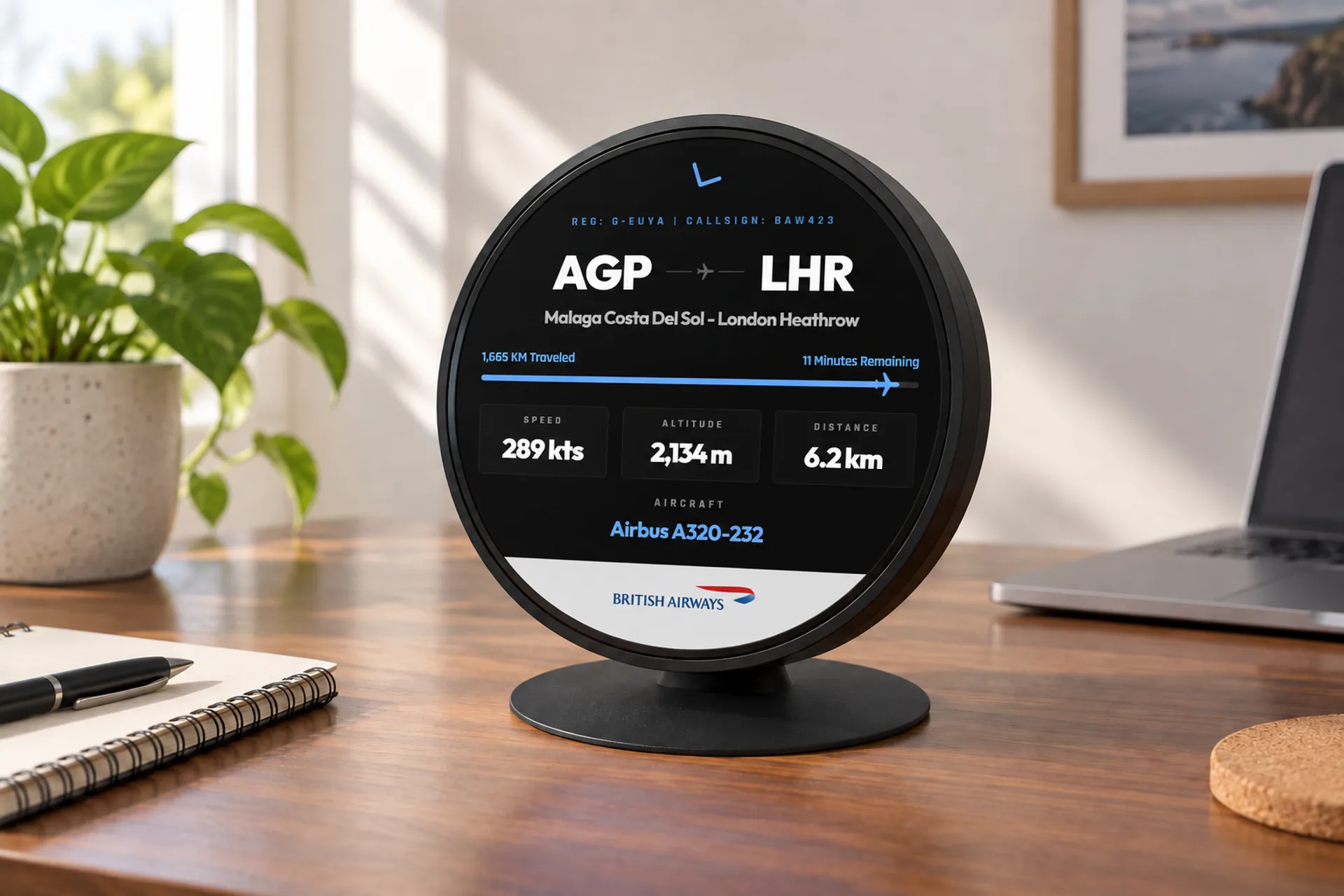
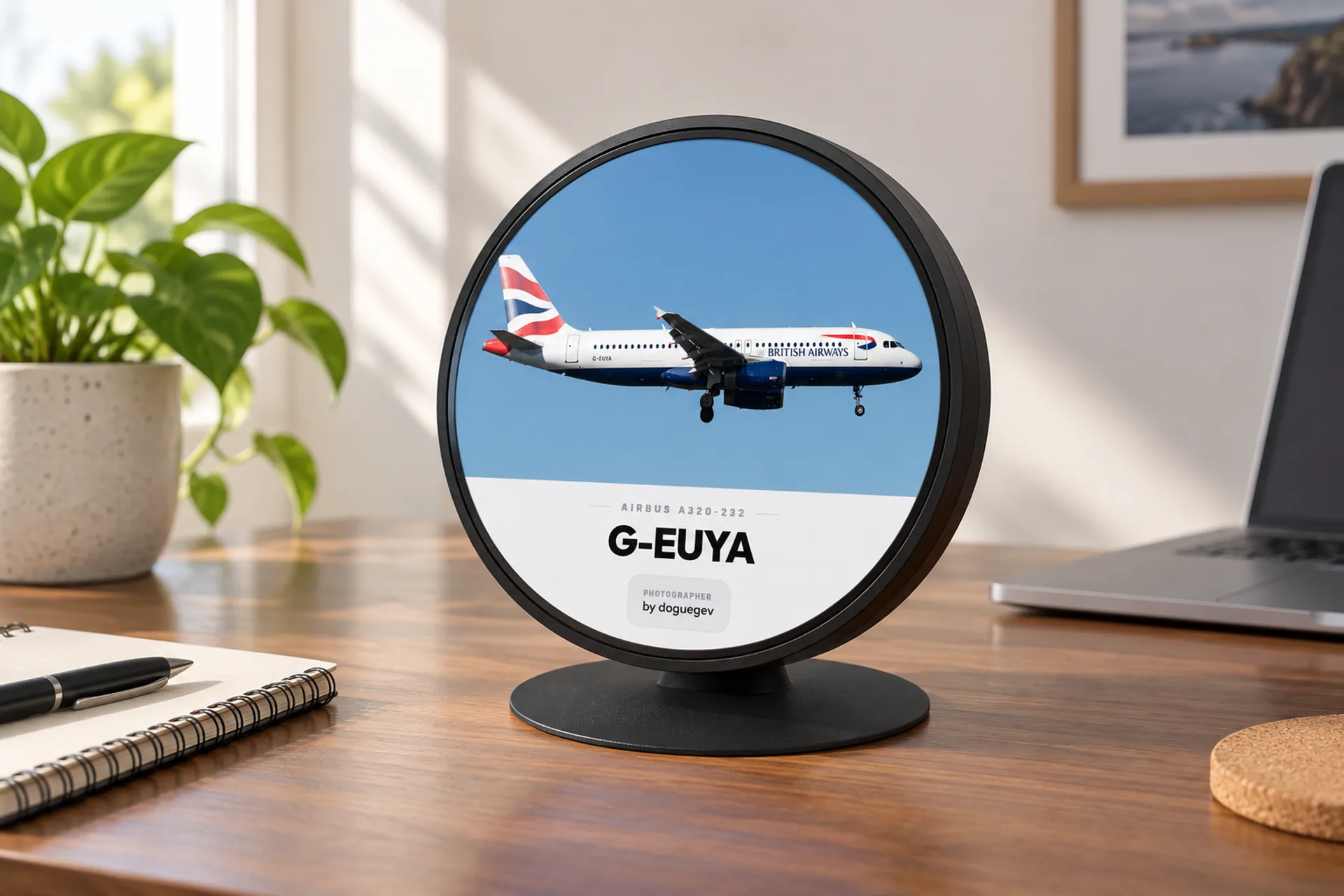
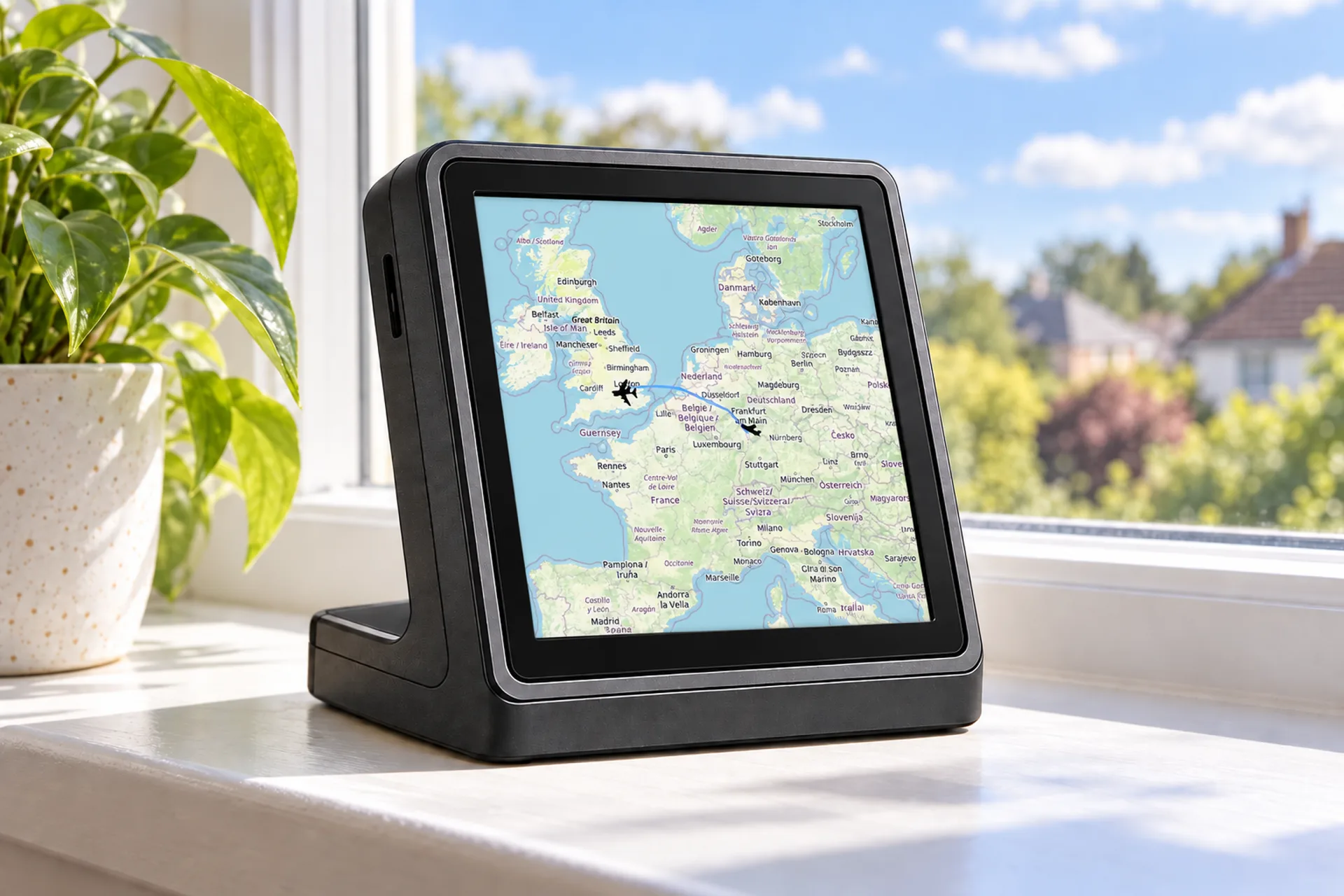
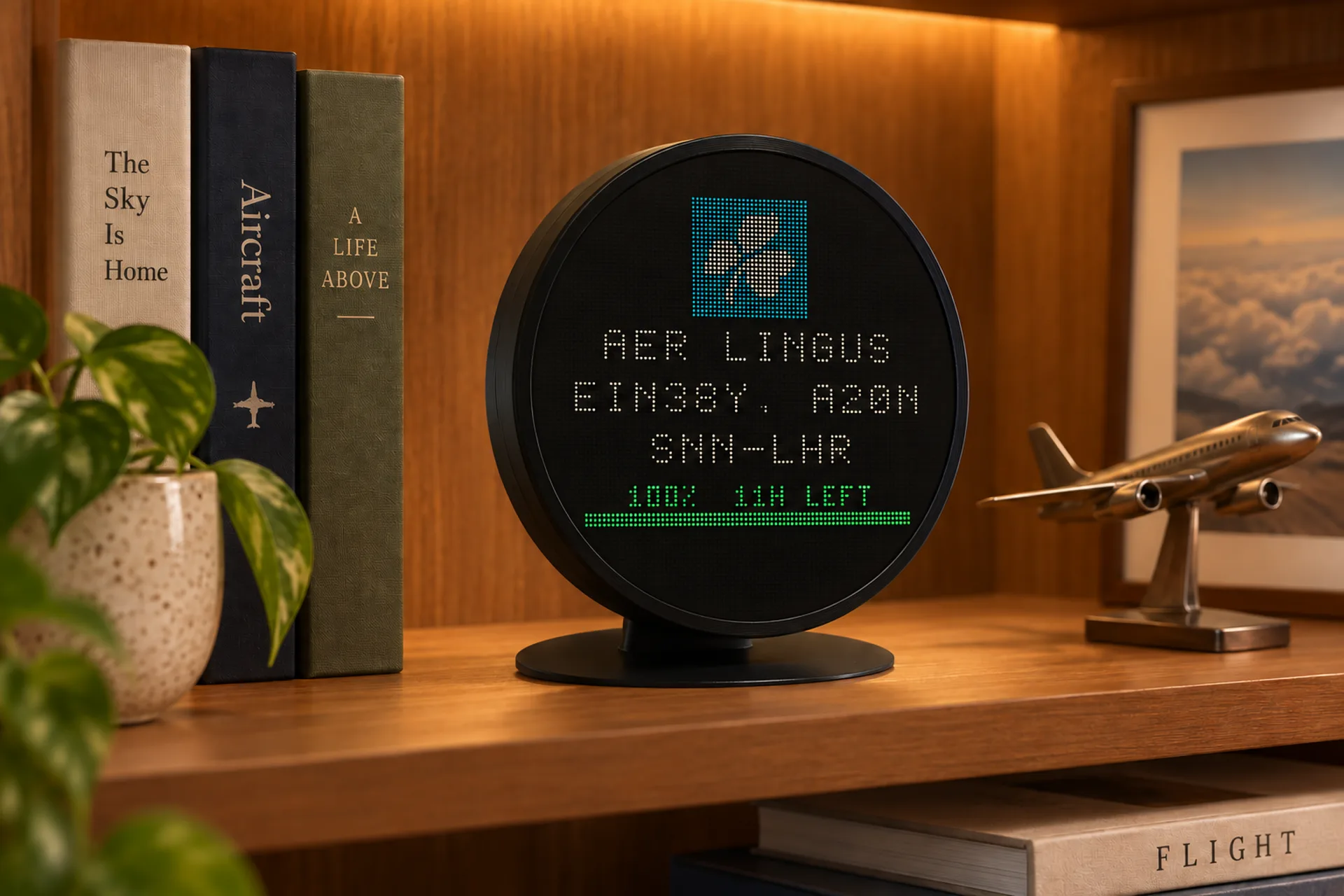
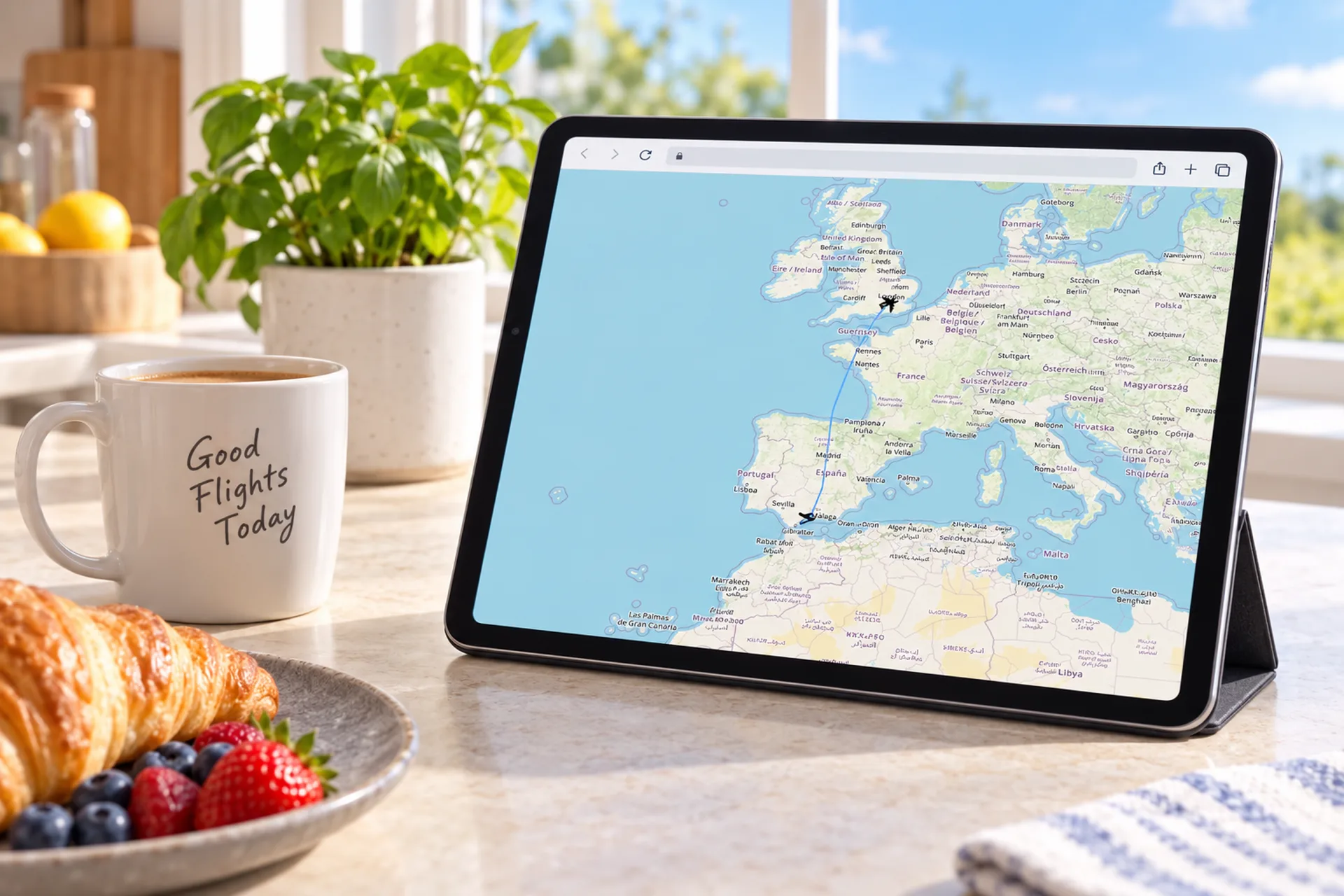
How FlightAbove finds aircraft

Searching the sky
above your home.
Explained simply.

Every aircraft you see on FlightAbove got there through a five-step pipeline. From the transponder on the plane to the display on your desk. This page walks through all of it.

The same technology that powers Flightradar24, filtered and focused on your specific patch of sky.

The tracking pipeline

From plane to your display.

Five steps. Every aircraft you see on FlightAbove has come through all of them.

01

Aircraft

Transponder fires

ADS-B Out transponder broadcasts GPS position, altitude, speed and identity on 1090 MHz, twice per second.

02

ADS-B signal

1090 MHz broadcast

Radio signal travels line-of-sight. A plane at 35,000 ft can be picked up 400 km away.

03

Ground receivers

SDR antennas worldwide

Thousands of amateur and commercial SDR receivers decode the signal and stream raw data to aggregator servers over the internet.

04

Tracking network

Data enriched and merged

Multiple reports are deduplicated and merged. Route, airline, and registration data is added. An API makes it available.

05

Your display

Filtered to your sky

FlightAbove applies your location, bearing and radius filter. Only aircraft in your personal window appear on the display.

1
ADS-B

What is ADS-B and how does it work?

ADS-B (Automatic Dependent Surveillance-Broadcast) is the technology that makes modern aircraft tracking possible. Unlike old-fashioned radar, which bounces radio waves off planes and waits for a return, ADS-B is entirely self-reporting. Aircraft do the broadcasting themselves.

Each aircraft fitted with an ADS-B transponder transmits a data packet on 1090 MHz roughly twice per second. That packet contains GPS-derived position, pressure altitude, ground speed, heading, and the aircraft's unique ICAO identity code. No ground station needs to interrogate the aircraft. It just broadcasts, constantly.

Since 2020, ADS-B Out has been mandatory for aircraft flying in most controlled airspace across the US and Europe. Coverage is now comprehensive for commercial aviation worldwide.

Reception range: Because signals travel line-of-sight, a plane cruising at 35,000 ft can be detected by a ground receiver up to 400 km away. Aircraft on approach are typically visible from 50 to 100 km.

Key ADS-B facts

Frequency

1090 MHz

Dedicated aviation transponder band

Update rate

~2x per second

Position and data refreshed continuously

Range (cruise altitude)

400+ km

Line-of-sight reception, varies by terrain

Mandatory in

US and Europe since 2020

Most controlled airspace worldwide

No interrogation needed

Self-broadcasting

Aircraft transmits without being asked

2
Ground networks

Receivers, aggregators and APIs.

The signal from an aircraft gets picked up by the nearest ground receiver, forwarded to an aggregator, enriched with route and airline data, then made available as a live API. That is where FlightAbove connects.

Ground receivers

Thousands of amateur and commercial SDR (Software Defined Radio) receivers sit in homes, offices and towers worldwide. They silently listen on 1090 MHz, decode ADS-B packets, and stream the raw data to aggregator servers over the internet. Dense coverage over Europe and North America; growing everywhere else.

Data aggregation

Multiple receivers often pick up the same aircraft. Aggregators merge and deduplicate these reports to build a single clean position update. They then enrich the raw transponder data with flight plans, airline names, aircraft registration, logos and route information pulled from aviation databases.

Live APIs

The enriched, deduplicated data stream is exposed as a live API. Apps and displays connect to these APIs to get real-time aircraft data. FlightAbove uses a high-quality commercial data provider to ensure accuracy, coverage and reliable refresh rates for your display.

Refresh rate: Commercial tracking APIs update every 5 to 15 seconds for live aircraft. FlightAbove polls on a short cycle and updates your display the moment a new aircraft enters or leaves your detection zone.

3
Your sky filter

From global data
to your window.

FlightAbove takes the same global ADS-B data feed and applies a geometric filter specific to you. You set three parameters once during setup.

Given your location, the aircraft's GPS position, your specified compass bearing and viewing arc, FlightAbove calculates in real time which aircraft fall within your personal window to the sky. Only those appear on your display.

Your location

Latitude and longitude of where the display sits. Set from the dashboard using your phone or typed in directly.

Compass bearing

The direction your window or garden faces. FlightAbove filters to aircraft within your viewing arc centred on that bearing.

Tracking radius

How far out to look, in kilometres or miles. Set wider to see more aircraft; narrower to focus on what is directly overhead.

FlightAbove vs Flightradar24

FR24 FlightAbove
Data source ADS-B network Same ADS-B network
View Global map Your window only
Interaction Open the app Always-on display
Location filter Manual zoom Set once, automatic
Subscription From £2.99/mo None, ever
Form factor Phone or screen Dedicated device
See it on your desk.

FlightAbove uses the exact pipeline described above. Handbuilt in the UK. One-time payment. No subscription.

Common questions

Tracking explained.

Modern flight radar uses ADS-B: aircraft broadcast their position, altitude and speed on 1090 MHz, ground receivers capture the signals, and networks aggregate and display them. See the pipeline above for the full flow from aircraft to your screen.

Planes transmit position and flight data via ADS-B transponders roughly twice per second. Ground stations and amateur receivers pick up these broadcasts and send them to tracking networks. No interrogation of the aircraft is needed, it just broadcasts automatically.

Most commercial airliners and many general aviation aircraft broadcast ADS-B and appear on tracking sites. Some older or very light aircraft may not be equipped. Military aircraft sometimes operate with reduced or no ADS-B, which is why they occasionally disappear from tracking maps.

Both use the same ADS-B data. The difference is presentation and purpose. Flightradar24 shows you the entire world on an interactive map you have to open. FlightAbove is a physical, always-on display that shows only the aircraft visible from your specific window. Set once, then just glance at it.

Military aircraft that operate with ADS-B enabled will appear. Many however operate with transponders off or in modes not publicly accessible. Tracking civilian commercial traffic is where ADS-B coverage is most comprehensive.

Coverage is densest over Europe and North America but extends to most populated areas worldwide. FlightAbove uses a commercial data provider with broad coverage. If aircraft are flying over your area, they will almost certainly appear on the display.

Now you know how it works.

See it on your desk.

FlightAbove is a dedicated display showing live aircraft visible from your window. Always on. No app. No subscription.

£269.00 one-time payment