
Skip to content

Under the flight path

Why do planes fly over my house?

Because your house sits under a route. Airports publish fixed paths for aircraft leaving and arriving, and the aircraft fly them very precisely. If one passes over your roof, the next aircraft on that route will too.

The wind decides which end of the runway is in use, so the line over your house can switch on and off from one day to the next. High above all of that, airliners cruising between countries follow airways of their own.

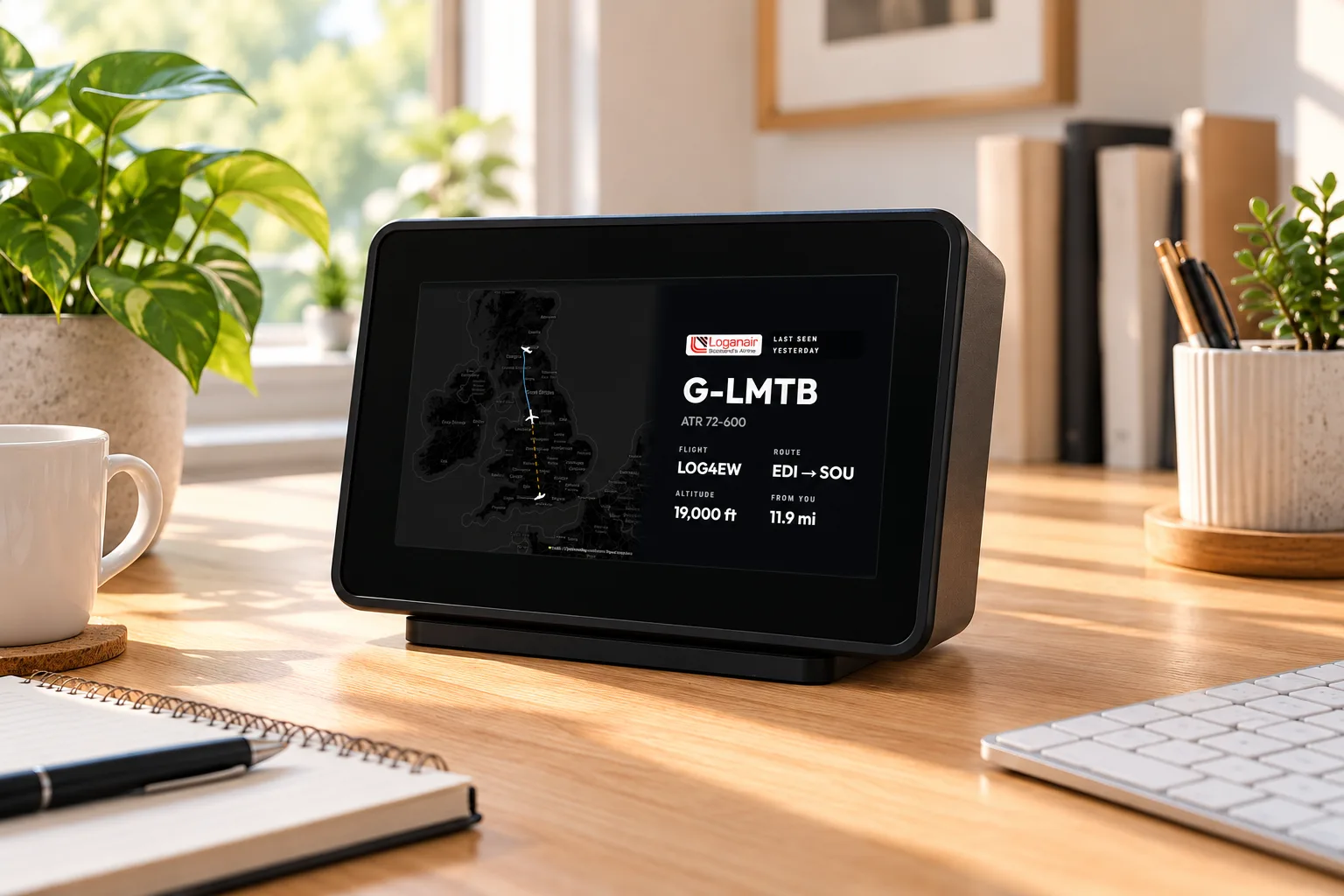
FlightAbove Horizon showing a live flight map of aircraft passing over the house
A live map on FlightAbove Horizon. The same lines appear day after day, because the routes are published.

Fixed paths

Aircraft follow published routes

Every busy airport publishes standard departure routes and standard arrival routes. A departure route tells the crew exactly which way to turn after take-off, how high to be by each point, and where to join the wider airway network. Arrivals work the same way in reverse.

Modern aircraft fly these routes by satellite navigation, and they hold the line to within a few hundred metres. That precision is good for safety and fuel, but it concentrates the traffic. Where older procedures spread aircraft over a wide band, today the same narrow strip of houses can hear most of them.

Busy airports also have holding patterns, often called stacks, where arriving aircraft fly ovals while they wait for a landing slot. If you live under one, you will see aircraft circling at a steady height, usually several thousand feet up.

Why it changes

The wind decides which way the runway is used

Aircraft take off and land into the wind, because it gives more lift at a lower ground speed. When the wind swings round, the airport turns its operation around too. Departures that climbed out over one side of town start climbing out over the other, and the arrivals swap with them.

In the UK the wind blows from the west or south-west most of the time, so many airports spend most of the year landing towards the west. When an easterly sets in, often in settled spring weather, people who rarely hear aircraft suddenly have them overhead for days.

Some airports with two runways also swap which one is used for landings at set times of day, so the noise is shared between neighbourhoods. A quiet afternoon followed by a busy evening can be the timetable, not a change of route.

Near or far from an airport

Low and loud, or high and quiet

Not every aircraft over your house is going to a nearby airport. Above about 25,000 feet, airliners crossing the country follow airways between distant cities. They leave contrails on cold days and are often too high to hear. If your sky is full of white lines but quiet, that is probably what you are seeing.

Near an airport the picture is different. A normal approach descends about 300 feet for every mile, so an aircraft 10 miles from the runway is roughly 3,000 feet up and easy to hear. How high do planes fly? has the numbers for every kind of aircraft.

  • check_circleA steady procession at the same height and heading: you are under a departure or arrival route.
  • check_circleAircraft circling at the same height: you are under a holding stack.
  • check_circleHigh, quiet aircraft and contrails in every direction: you are under the airways, not near an airport.
  • check_circleHelicopters low and at odd times: police, air ambulance, the coastguard or pipeline and power-line inspections.

Checking for yourself

How to see which route is over you

Many larger UK airports publish a flight-track viewer, often called WebTrak, that shows each aircraft's path and height over the past few days. Airport noise teams also publish the departure routes and their noise-preferential routes, and they take questions and complaints from residents.

Changes to the routes themselves go through the Civil Aviation Authority's airspace change process, which includes public consultation. If an airport near you is redesigning its routes, the proposals and maps are published there.

For the aircraft in front of you right now, a tracking site or a display at home will name it: the airline, the type, where it came from and where it is going. How aircraft tracking works explains where that information comes from.

On the desk

Name the one going over

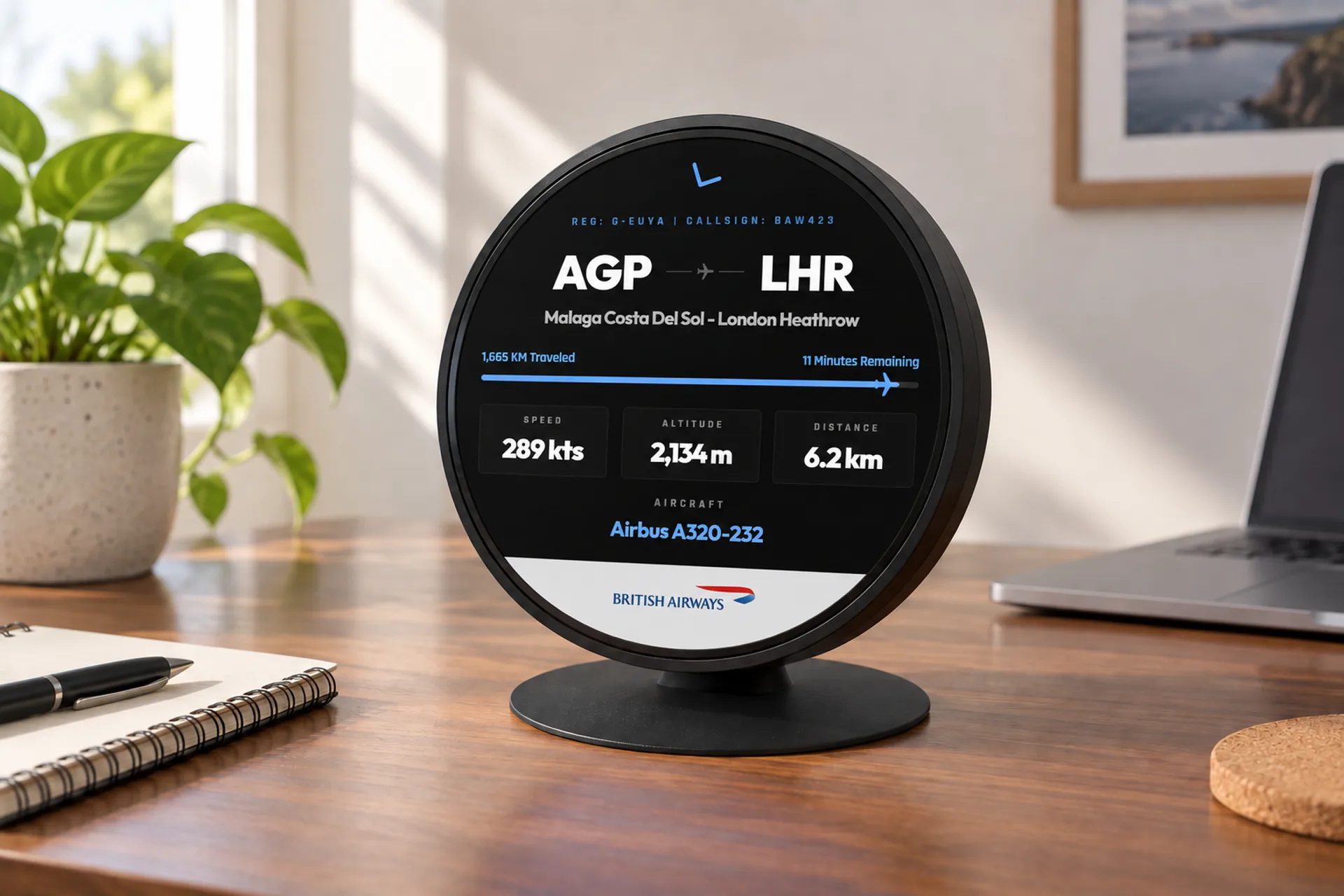
FlightAbove sits on a desk or a shelf and names the aircraft over your house: the flight, the airline, the type, a photo of that type, the route and the height. It picks the plane you can actually see or hear, and it stays on that one until another is clearly closer.

Set your location and the window you look out of, and it ignores aircraft behind the house. When the sky is quiet it is a clock and the weather. Window detection explains how it chooses.

Hardware from £99.00, paid once, made in the UK

FlightAbove Altitude on a desk showing the flight, airline, type, route and height of the aircraft overhead

Quick answers

Questions about planes over the house

Why do planes fly over my house?

Your house is under a published route into or out of an airport, or under a holding pattern, or under an airway used by aircraft cruising between cities. Aircraft fly those routes precisely, so they cross the same roofs again and again.

Why have the planes over my house changed?

Usually the wind. Aircraft take off and land into the wind, so when it changes direction the airport turns its operation around and the routes over the houses change with it. Some airports also alternate runways at set times.

Why are there more planes over my house than there used to be?

Satellite navigation lets aircraft fly routes much more precisely than before, which concentrates traffic over a narrower strip. Routes also change through the CAA airspace change process, and traffic grows or shrinks with the airport.

How low can a plane fly over my house?

Near an airport, as low as the approach or departure needs. Away from airports, the rules generally keep aircraft well clear of built-up areas, with exceptions such as police, air ambulance and other emergency flying, and take-off and landing.

Can I find out which plane just flew over?

Yes. Most aircraft broadcast their position and identity, so a tracking site or a FlightAbove display can name it, with the airline, the type, the route and the height.

Who do I contact about aircraft noise?

The airport's noise or community team first. They can tell you which route the aircraft was on and why. Changes to routes go through the Civil Aviation Authority's airspace change process, which is published.

How high do planes fly?· What are planes overhead?· How aircraft tracking works· Window detection

Under a flight path?

Know which one it was.

The flight, the airline, the type and the height, on a screen you leave on. A clock when the sky is quiet. Paid once, made in the UK.