7500
Unlawful interference
A threat to the aircraft, including a hijack. Rare and grave.
Emergency codes
Squawk 7600 means the crew cannot talk to air traffic control by radio. The aircraft is usually flying perfectly well. Setting 7600 tells every controller who can see it that the crew will follow the published radio-failure procedure.
It is one of three codes reserved worldwide. 7700 is a general emergency and 7500 is unlawful interference. 7600 is the least alarming of the three, and the rarest to see on a tracker.
Radio failure
Every transponder-equipped aircraft broadcasts a four-digit squawk code. Controllers assign most codes, so each aircraft on their screen can be told apart. 7600 is reserved for one situation: the crew has lost two-way radio contact.
The transponder is separate from the radios the crew talks on, so it usually keeps working when they fail. Setting 7600 makes the aircraft stand out on every radar screen in range, and tells controllers what to expect. They clear the airspace ahead of it and keep other traffic away.
7500
A threat to the aircraft, including a hijack. Rare and grave.
7600
The crew cannot talk to air traffic control. The aircraft can usually fly on normally.
7700
Anything else that needs priority: technical, medical, fuel.
The procedure
The rules are published in advance, so the crew and the controllers both know the plan without needing to speak. The details vary a little between countries, but the shape is the same.
Crews also keep trying: other radios, other frequencies, a satellite phone, or relaying through another aircraft. Many radio failures are fixed within minutes.
In practice
True radio failures on airliners are uncommon, because they carry more than one radio. Far more often a crew loses contact for a while because they are on the wrong frequency, or a microphone is stuck. That is called a loss of communication, and it does not normally involve 7600.
In the UK, an airliner that stops answering for long enough can lead to RAF Typhoons being sent up to look. Several of the sonic booms reported over Britain in recent years came from those flights. Nearly all of them end with the crew back on the right frequency and a normal landing.
The difference
It is treated as one, because an aircraft that cannot be spoken to needs space. But it is a communications problem with a known procedure, not a request for help in the way 7700 is. An aircraft squawking 7600 is often perfectly healthy and simply quiet.
If a radio failure comes with another problem, the crew can set 7700 instead. What does squawk 7700 mean? covers the general emergency code, and squawk 7500 covers unlawful interference.
On the desk
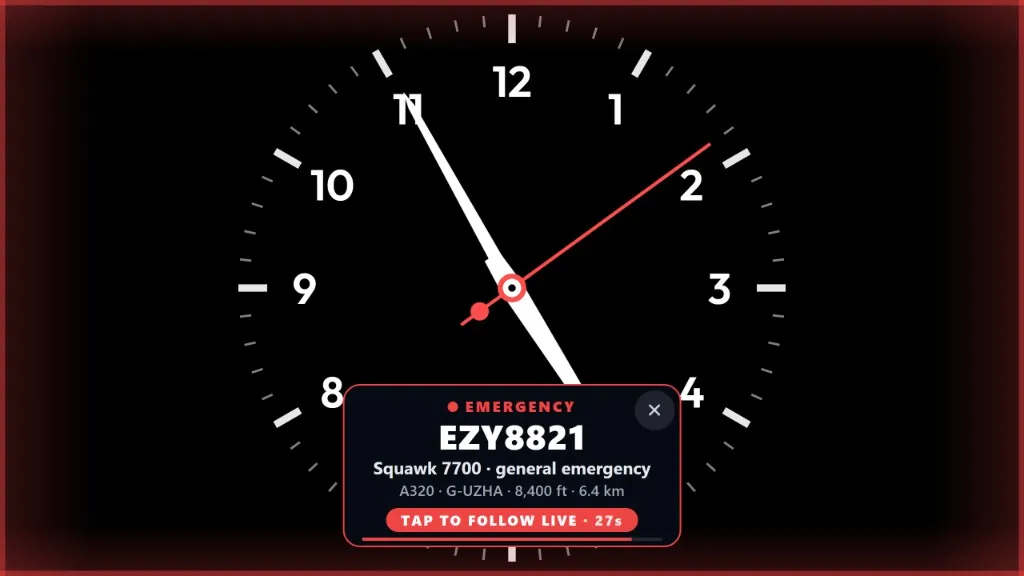
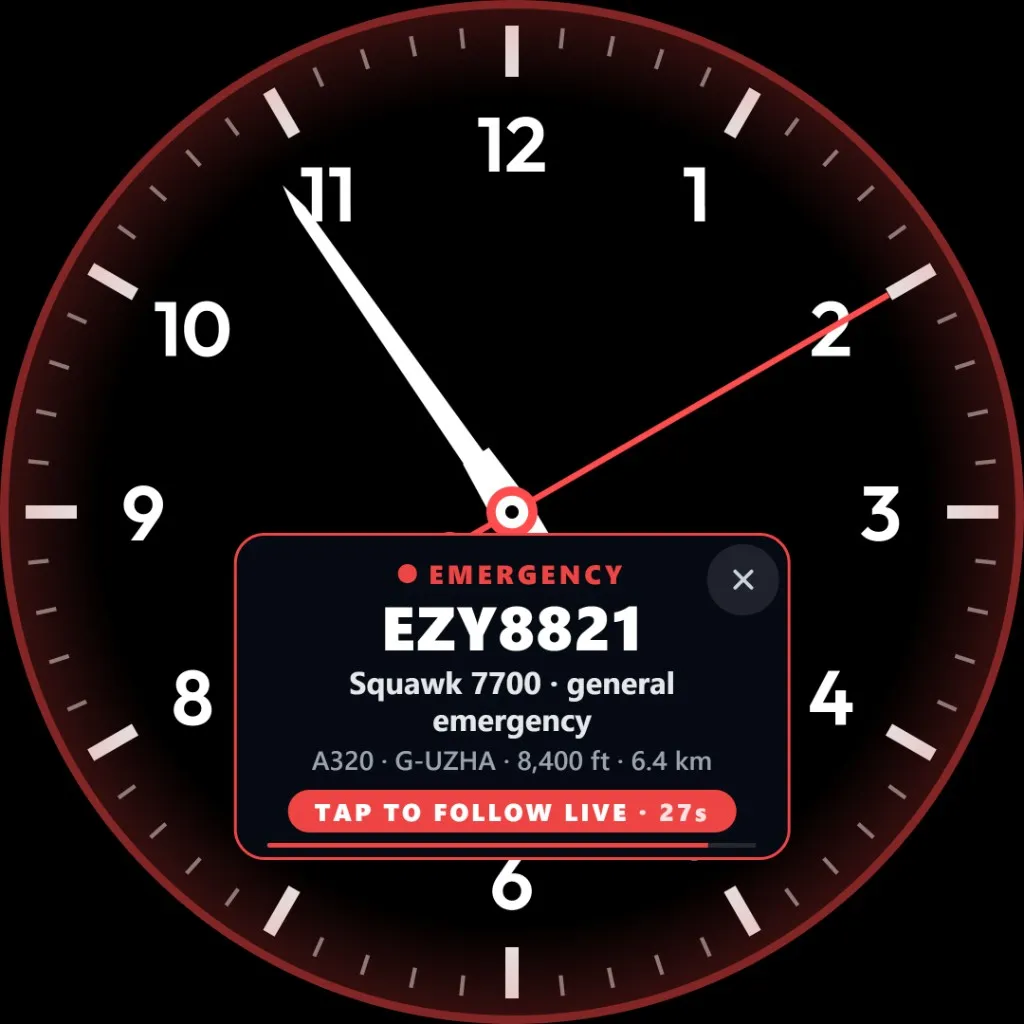
FlightAbove puts emergency squawks on a red card that names the code and what it means. It waits until the code has been seen twice in a row, so one garbled read does not set off an alert. You choose whether to hear about emergency squawks inside your range only, or anywhere.
This is for people who watch aircraft. It is not a distress service. Recent 7500, 7600 and 7700 reports, with a photo and a place, are listed on recent squawk alerts.
Hardware from £99.00, paid once, made in the UK
Quick answers
The crew has lost two-way radio contact with air traffic control. The transponder still works, so setting 7600 tells controllers to expect the published radio-failure procedure and keep other traffic clear.
It is handled urgently, because the aircraft cannot be spoken to, but the aircraft itself is usually fine. It is less serious than 7700, the general emergency, and 7500, unlawful interference.
The crew follows a published plan: land at the nearest suitable airport if they can do it visually, or hold the last level and speed for a short time and then continue to the destination as planned. Controllers clear the way.
Controllers keep other traffic away, and the tower can use light signals. A steady green light means cleared to land, a flashing green means come back to land, and a steady red means give way and keep circling.
An aircraft that does not answer cannot be asked what is wrong, so in the UK RAF Typhoons may be sent to check visually. Almost every case is a crew on the wrong frequency.
Not often. Airliners carry more than one radio, and most losses of contact are a wrong frequency or a stuck microphone, which crews fix without setting 7600.
What does squawk 7700 mean?· What does squawk 7500 mean?· Live flight alerts· Recent squawk alerts
When one is near you
7700, 7600 and 7500, in words, after the squawk has been seen twice. Made in the UK. Hardware paid once.